Pakistan's trans people struggle to get safe surgery / Photo: © AFP

In Pakistan, where gender affirmation surgery was recently legalised, Bunty is one of the few trans women who could afford to get it done safely.
Despite winning the right to medically transition in 2018, many transgender people in the Muslim-majority nation still turn to unqualified surgeons because of a lack of trained doctors, high costs and cultural taboos.
Bunty, who no longer uses her family name since her transition, said she went to the only doctor in the northeastern city of Lahore who performs breast augmentation surgery for trans women -- a qualified, experienced professional.
While the procedure was successful, she said it took place in an "underground" manner and cost twice the normal rate for a cisgender woman.
"I was kept at the hospital for only two hours and then I was forced to leave so that no one would find out," she told AFP.
"I was in extreme pain."
It was the latest ignominy for Bunty, who said she was shunned by her family over her gender identity, then sacked from the job that funded her hospital bills, pushing her into sex work.
She said the hospital did not want news of her procedure to spread among doctors and patients who might disapprove.
"Gender transitioning is still controversial. Doctors fear they will be judged," said Mudassir Mahboob, a doctor who carries out legal gender-affirmation surgeries.
Mahboob said he chose to work in the capital, Islamabad, to avoid causing controversy in his deeply conservative home province of Khyber Pakhtunkhwa.
He has operated on patients who have asked him to repair damage done to them by unscrupulous backstreet "doctors".
One of them, "who got castrated by a so-called practitioner, came to me and asked me to fix what went wrong", he said.
- 'Have fear of God' -
Reem Sharif, a member of a communal household known as a "dera" for trans people, said there were only two doctors in Pakistan openly offering legal, safe gender affirmation procedures.
Public hospitals often turn away those who enquire about such services, citing religion, Sharif said.
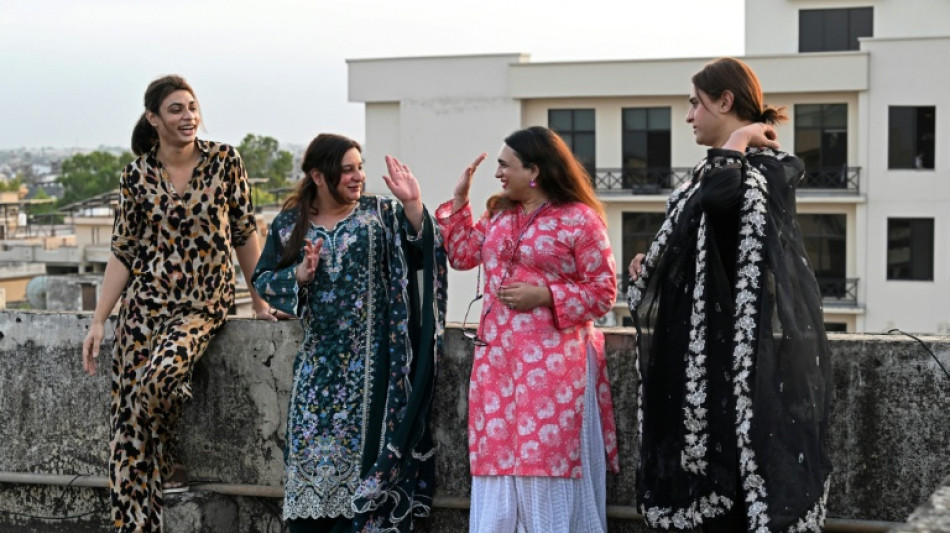
"They would say: 'Have fear of God, how can you try to do this?'" she told AFP, surrounded by other trans women putting on make-up and fixing their hair.
"Gender transition is legal according to the law, but practically it is not, and (it) is not accepted in society."
No reliable data exists on the number of transgender people in Pakistan.
The country has long recognised a third sex, known as "khawaja sira", who for centuries have played a spiritual role in society, offering blessings at weddings and births.
The 2018 law aimed to strengthen political and social rights for transgender people, whose wider integration was being met with increasing violence.
Despite being lauded around the world, the law drew domestic backlash from right-wing religious groups, which spread disinformation that it would lead to same-sex marriage in a country where homosexuality is illegal.
The law remains in force but is subject to court challenges, including a review of whether it complies with Islamic law, which coexists with Pakistan's secular legal code.
Psychiatrist Sana Yasir said "the most visits and follow-ups I have had" came in the three years since those challenges began, as transgender clients grappled with the potential repercussions of any legal change.
Rights groups say trans people who are helped to transition report better quality of life, while those not given support are more likely to report mental health issues, including suicidal ideation.
According to Pakistan's religious and cultural norms, having surgery to change gender characteristics is "a sin", even if it aligns one's body and gender identity, said Mehleb Sheikh, an independent trans rights researcher and activist.
Gender affirmation surgery is available in some other Muslim countries, such as Egypt, where the procedure is legal but only with approval from doctors and religious officials. In practice, access remains extremely limited.
In Iran, gender affirmation care is legal and even subsidised by the government, but according to activists, transgender people face discrimination on a daily basis.
- Threats, violence, and pride -
Activists say Pakistan is seeing a rise in violence against trans people, although exact figures are not available due to severe underreporting.
The Gender Interactive Alliance in Pakistan says 56 people have been killed since 2022.
They include three trans women whose bullet-ridden bodies were found on a roadside in the megacity of Karachi last month.
"My brother threatened to kill me and demanded that either I be thrown out of the house, or he would hurt me, blaming me for ruining their honour and their reputation," said Zarun Ishaque, a 29-year-old transgender man in Islamabad.
Despite the hardship, he told AFP that "this happiness after my transition is the dearest (thing)".
"My inner self has come out, and I am very happy with my life like this."
Haroon -- a pseudonym to protect his identity -- said his transformation had allowed him to finally feel "very comfortable with myself".
He has managed to have breast removal and bottom surgery despite being shunned by family and some doctors.
"If you have the capability, if you've taken this step and made the decision, then you don't step back," he told AFP.
P.Navarro--TFWP