The Fort Worth Press - In Norway's Arctic, meteorologists have a first-row seat to climate change

USD -
AED 3.672499
AFN 63.999874
ALL 81.995001
AMD 362.24416
ANG 1.789534
AOA 916.999911
ARS 1545.256969
AUD 1.471043
AWG 1.8015
AZN 1.699807
BAM 1.768075
BBD 2.01969
BDT 124.7271
BGN 1.768402
BHD 0.378339
BIF 3031.971396
BMD 1
BND 1.28871
BOB 11.737745
BRL 5.645151
BSD 1.002744
BTN 94.257612
BWP 13.912029
BYN 3.021131
BYR 19600
BZD 2.016797
CAD 1.42541
CDF 2315.000554
CHF 0.836375
CLF 0.025271
CLP 994.580085
CNY 6.67065
CNH 6.671501
COP 3317.63
CRC 452.741491
CUC 1
CUP 24.066716
CVE 99.682686
CZK 22.04965
DJF 178.57272
DKK 6.75618
DOP 60.840833
DZD 136.82826
EGP 53.416105
ERN 15
ETB 163.736061
EUR 0.903798
FJD 2.27435
FKP 0.755319
GBP 0.755235
GEL 2.590095
GGP 0.755319
GHS 11.742265
GIP 0.755319
GMD 74.000188
GNF 8884.750467
GTQ 7.662544
GYD 209.795014
HKD 7.84575
HNL 26.965236
HRK 6.812464
HTG 131.393262
HUF 330.545015
IDR 18205
ILS 3.200505
IMP 0.755319
INR 94.262501
IQD 1520.220946
IRR 1913499.9996
ISK 123.45989
JEP 0.755319
JMD 158.853708
JOD 0.709039
JPY 159.8875
KES 130.000049
KGS 87.448905
KHR 4132.369626
KMF 446.000118
KPW 899.999781
KRW 1335.990267
KWD 0.311401
KYD 0.835688
KZT 445.389661
LAK 22566.049676
LBP 89798.90162
LKR 333.473456
LRD 170.472626
LSL 16.775015
LTL 2.95274
LVL 0.60489
LYD 6.466515
MAD 9.87737
MDL 18.290958
MGA 4577.033471
MKD 55.623591
MMK 2099.899875
MNT 3604.081637
MOP 8.101667
MRU 40.575023
MUR 47.6199
MVR 15.409866
MWK 1736.999797
MXN 18.603701
MYR 4.087299
MZN 63.909832
NAD 16.760458
NGN 1347.359726
NIO 36.90227
NOK 9.546135
NPR 150.811136
NZD 1.804655
OMR 0.384487
PAB 1.002825
PEN 3.419079
PGK 4.574404
PHP 63.766994
PKR 277.296244
PLN 3.983905
PYG 6216.098937
QAR 3.655529
RON 4.833797
RSD 106.24038
RUB 82.197365
RWF 1481.320768
SAR 3.775017
SBD 8.097299
SCR 13.84591
SDG 601.503909
SEK 10.027555
SGD 1.287135
SHP 0.749316
SLE 22.891768
SLL 20969.518268
SOS 572.500271
SRD 37.503975
STD 20697.981008
STN 22.148795
SVC 8.774539
SYP 13001.999766
SZL 16.759659
THB 33.882503
TJS 9.250741
TMT 3.51
TND 3.01846
TOP 2.40776
TRY 50.36772
TTD 6.811884
TWD 32.867029
TZS 2648.788024
UAH 45.567202
UGX 4126.833458
UYU 40.644747
UZS 12003.525663
VES 900.490498
VND 25739.5
VUV 120.332725
WST 2.794859
XAF 592.852631
XAG 0.019995
XAU 0.000256495755
XCD 2.70255
XCG 1.807251
XDR 0.707052
XOF 592.852631
XPF 107.812959
YER 236.502307
ZAR 16.849845
ZMK 9001.198566
ZMW 20.481666
ZWL 321.999592
SSP 5946.510642
MXV 2.089219
  • RIO

    -0.3300

    97.04

    -0.34%

  • CMSC

    -0.0400

    20.67

    -0.19%

  • RELX

    0.0000

    33.41

    0%

  • RBGPF

    0.0000

    67.95

    0%

  • BCE

    -0.0700

    21.99

    -0.32%

  • BCC

    -0.0300

    75.66

    -0.04%

  • GSK

    0.8600

    51.08

    +1.68%

  • JRI

    -0.0300

    11.52

    -0.26%

  • NGG

    -0.1200

    76.68

    -0.16%

  • CMSD

    0.0900

    20.54

    +0.44%

  • BTI

    -0.0800

    55.75

    -0.14%

  • AZN

    2.0200

    168.1

    +1.2%

  • BP

    -1.4200

    43.16

    -3.29%

  • RYCEF

    0.4600

    19.7

    +2.34%

  • VOD

    0.0700

    17.02

    +0.41%

In Norway's Arctic, meteorologists have a first-row seat to climate change
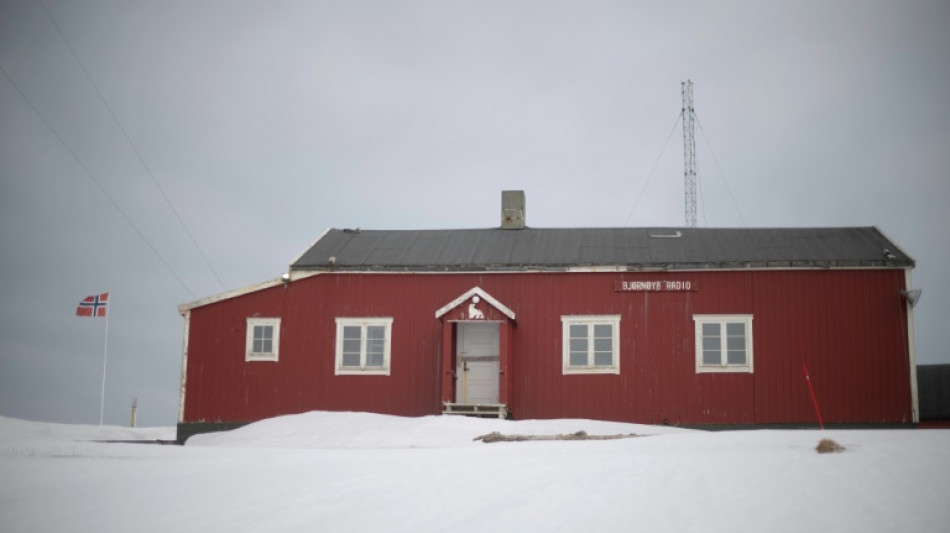
In Norway's Arctic, meteorologists have a first-row seat to climate change / Photo: © AFP

In Norway's Arctic, meteorologists have a first-row seat to climate change

In the cold of the Norwegian Arctic, meteorologist Trond Robertsen manually recorded precipitation levels for over two decades, witnessing firsthand the effects of climate change.

Text size:

At 66, Robertsen retired after enduring spartan conditions during missions that totalled eight years on two islands of the Svalbard archipelago: Bjornoya (Bear Island) and Hogen.

To reach the remote Bjornoya, where the only humans are the nine employees of the small weather station, the meteorologists have to fly in by helicopter as they are rotated on a six-month basis.

"The idea is to not stay too long, because it's a different rhythm, and you are isolated," Robertsen told AFP.

It is demanding work.

"It's a 24/7 occupation," he said. "We are doing it all day, all night." The team worked shifts to cover all hours of the day, he explained.

Weather observation starts in the early morning at 6:00 am.

"It's manually done, then you have to go outside and check the bucket that is collecting precipitation," said Robertsen.

"During wintertime you have to melt the snow and ice into water" to determine how much has fallen.

The data is then transmitted the Norwegian Meteorological Institute in Tromso and Oslo.

"This tiny little observation is actually quite crucial for the weather forecasting systems up north, because observations are so sparse from that area."

Bjornoya sits in the middle of fishing grounds, and the weather reports published twice a day are closely followed by the fishing boats in the area.

- Less ice, fewer bears -

Since his first missions to the Arctic in the 1990s, Robertsen has witnessed the changing climate.

"When I started going up north, there was a lot of ice. In the later years, it's less ice and fewer polar bears. You can see the climate change," he said.

Polar bears have been classified as a vulnerable population since 1982 on the IUCN (International Union for Conservation of Nature) Red List of Threatened Species, with the loss of Arctic sea ice the most pressing threat against the species.

However, their precise numbers, are almost impossible to assess.

In winter, employees of station always venture out in pairs and have to be armed due to the presence of polar bears, but according to Robertsen it's rarer to encounter them today.

In April, during his last mission to the island, Robertsen had an accident while doing carpentry: he slipped and ended up cutting one finger clean off and half of another.

Due to tough weather conditions, he had to wait some 26 hours before being evacuated by helicopter and transported to a hospital.

"It was a heavy snowstorm coming in, only the day after the helicopter came," he recounted.

Looking back, Robertsen does not regret the years spent under the austere living conditions.

"The Arctic has given me so many experiences and memories so it is a small fee to pay back with my left little finger and part of my ring finger," he said.

F.Garcia--TFWP