The Fort Worth Press - Brazil scientists developing new 'vaccine' for cocaine addiction

USD -
AED 3.672501
AFN 64.999803
ALL 81.889477
AMD 360.119901
ANG 1.790403
AOA 918.000022
ARS 1596.073702
AUD 1.504925
AWG 1.8025
AZN 1.700536
BAM 1.783505
BBD 2.014271
BDT 125.416063
BGN 1.77347
BHD 0.377157
BIF 3004.860522
BMD 1
BND 1.289817
BOB 11.856594
BRL 5.577987
BSD 1.000087
BTN 93.057208
BWP 14.795732
BYN 3.009315
BYR 19600
BZD 2.011408
CAD 1.42495
CDF 2280.00006
CHF 0.83595
CLF 0.026382
CLP 1038.319802
CNY 6.664501
CNH 6.65489
COP 3513.59
CRC 444.00673
CUC 1
CUP 24.002262
CVE 100.552164
CZK 22.309897
DJF 178.091873
DKK 6.82872
DOP 59.83093
DZD 137.256783
EGP 54.8207
ERN 15
ETB 163.488542
EUR 0.913705
FJD 2.29315
FKP 0.763022
GBP 0.762795
GEL 2.589859
GGP 0.763022
GHS 11.876656
GIP 0.763022
GMD 73.999908
GNF 8872.048806
GTQ 7.646431
GYD 209.196398
HKD 7.828595
HNL 26.886986
HRK 6.831965
HTG 131.224979
HUF 338.256995
IDR 18385.85
ILS 3.32952
IMP 0.763022
INR 92.96865
IQD 1516.154625
IRR 1952357.999888
ISK 125.34006
JEP 0.763022
JMD 158.279417
JOD 0.709025
JPY 159.494004
KES 130.189819
KGS 87.449825
KHR 4066.204633
KMF 448.999911
KPW 900.00035
KRW 1335.170435
KWD 0.31272
KYD 0.833493
KZT 458.44295
LAK 22554.656332
LBP 89559.777677
LKR 333.184388
LRD 164.017545
LSL 17.359998
LTL 2.95274
LVL 0.60489
LYD 6.482794
MAD 10.023573
MDL 18.412533
MGA 4528.43953
MKD 56.224991
MMK 2099.749618
MNT 3610.663578
MOP 8.064106
MRU 40.585631
MUR 46.850178
MVR 15.403654
MWK 1734.170462
MXN 19.65119
MYR 4.121301
MZN 63.405031
NAD 17.359998
NGN 1361.989766
NIO 36.805005
NOK 9.79395
NPR 148.89203
NZD 1.828935
OMR 0.384506
PAB 1.000068
PEN 3.468936
PGK 4.576853
PHP 63.839031
PKR 276.356465
PLN 4.08189
PYG 6442.670266
QAR 3.645798
RON 4.879899
RSD 107.429675
RUB 82.200029
RWF 1478.310034
SAR 3.75101
SBD 8.177162
SCR 13.916245
SDG 601.519621
SEK 10.26192
SGD 1.290465
SHP 0.763854
SLE 22.999714
SLL 20969.503664
SOS 571.584899
SRD 37.260343
STD 20697.981008
STN 22.341682
SVC 8.750764
SYP 13002.000337
SZL 17.355621
THB 33.973038
TJS 9.280839
TMT 3.5
TND 3.031356
TOP 2.40776
TRY 50.787335
TTD 6.78555
TWD 33.027986
TZS 2687.437998
UAH 45.029523
UGX 4315.175612
UYU 40.716947
UZS 12021.758261
VES 921.380505
VND 25836.5
VUV 122.054421
WST 2.818493
XAF 599.351246
XAG 0.022957
XAU 0.000275313341
XCD 2.70255
XCG 1.802439
XDR 0.707052
XOF 599.351246
XPF 108.755323
YER 236.598403
ZAR 17.397603
ZMK 9001.201522
ZMW 20.877162
ZWL 321.999592
SSP 5775.406322
MXV 2.198389
  • RIO

    -0.3300

    97.04

    -0.34%

  • CMSC

    -0.0400

    20.67

    -0.19%

  • RELX

    0.0000

    33.41

    0%

  • RBGPF

    0.0000

    67.95

    0%

  • BCE

    -0.0700

    21.99

    -0.32%

  • BCC

    -0.0300

    75.66

    -0.04%

  • GSK

    0.8600

    51.08

    +1.68%

  • JRI

    -0.0300

    11.52

    -0.26%

  • NGG

    -0.1200

    76.68

    -0.16%

  • CMSD

    0.0900

    20.54

    +0.44%

  • BTI

    -0.0800

    55.75

    -0.14%

  • AZN

    2.0200

    168.1

    +1.2%

  • BP

    -1.4200

    43.16

    -3.29%

  • RYCEF

    0.4600

    19.7

    +2.34%

  • VOD

    0.0700

    17.02

    +0.41%

Brazil scientists developing new 'vaccine' for cocaine addiction
Brazil scientists developing new 'vaccine' for cocaine addiction / Photo: © AFP

Brazil scientists developing new 'vaccine' for cocaine addiction

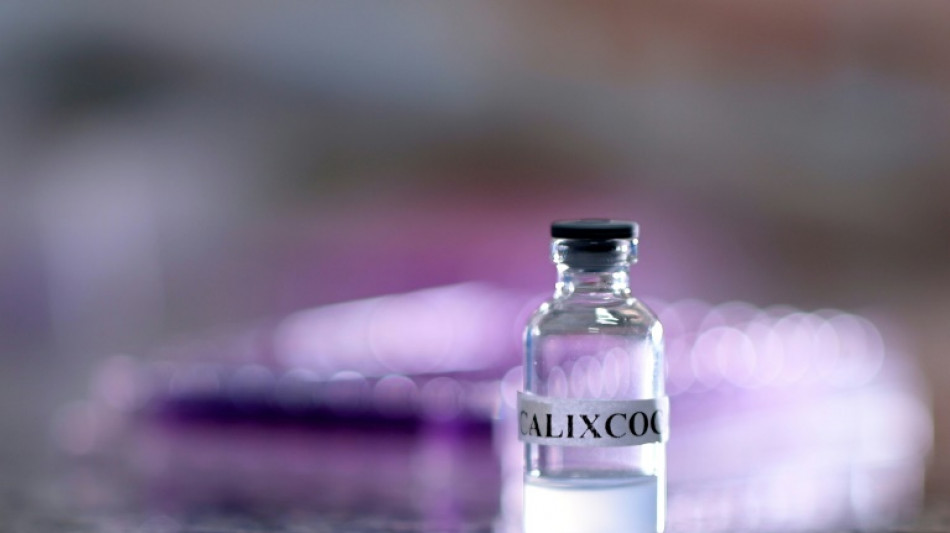
Scientists in Brazil, the world's second-biggest consumer of cocaine, have announced the development of an innovative new treatment for addiction to the drug and its powerful derivative crack: a vaccine.

Text size:

Dubbed "Calixcoca," the test vaccine, which has shown promising results in trials on animals, triggers an immune response that blocks cocaine and crack from reaching the brain, which researchers hope will help users break the cycle of addiction.

Put simply, addicts would no longer get high from the drug.

If the treatment gets regulatory approval, it would be the first time cocaine addiction is treated using a vaccine, said psychiatrist Frederico Garcia, coordinator of the team that developed the treatment at the Federal University of Minas Gerais.

The project won top prize last week -- 500,000 euros ($530,000) -- at the Euro Health Innovation awards for Latin American medicine, sponsored by pharmaceutical firm Eurofarma.

The vaccine works by triggering patients' immune systems to produce antibodies that bind to cocaine molecules in the bloodstream, making them too large to pass into the brain's mesolimbic system, or "reward center," where the drug normally stimulates high levels of pleasure-inducing dopamine.

Similar studies have been carried out in the United States -- the world's top cocaine consumer, according to the United Nations Office on Drugs and Crime. But they stalled when clinical trials did not demonstrate sufficient results, among other reasons, Garcia says.

Calixcoca has so far proven effective in testing on animals, producing significant levels of antibodies against cocaine and few side effects.

It also protected rat fetuses against cocaine, researchers found, suggesting it could be used in humans to protect the unborn babies of pregnant addicts.

The vaccine is now set to enter the final stage of trials: testing on humans.

- No 'panacea' -

Garcia says Calixcoca could reshape addiction treatment.

"There's no specific registered treatment for cocaine and crack addiction. We currently use a combination of psychological counseling, social assistance and rehabilitation, when necessary," he says.

Calixcoca could add an important tool to that regimen, helping patients at critical stages of recovery, such as when they leave rehab, he says.

The vaccine is made with chemical compounds designed in the lab, rather than biological ingredients, meaning it would be less expensive to produce than many vaccines and would not have to be stored at cold temperatures.

But it won't be a "panacea" that can be administered to anyone, Garcia says.

The exact target group will depend on the outcome of clinical trials, but is theoretically meant to be recovering addicts "who are off (cocaine) and want to stay that way," he says.

The goal is to change what Garcia calls a "sad statistic": according to the US National Institute on Drug Abuse, one in four regular cocaine users becomes addicted.

And just one in four addicts manages to quit after five years of treatment.

Given the stakes, anticipation around the vaccine is high. More than 3,000 people have contacted Garcia's team to volunteer to take part in the clinical trials.

M.T.Smith--TFWP