Honda plots a profitable European comeback without a price war

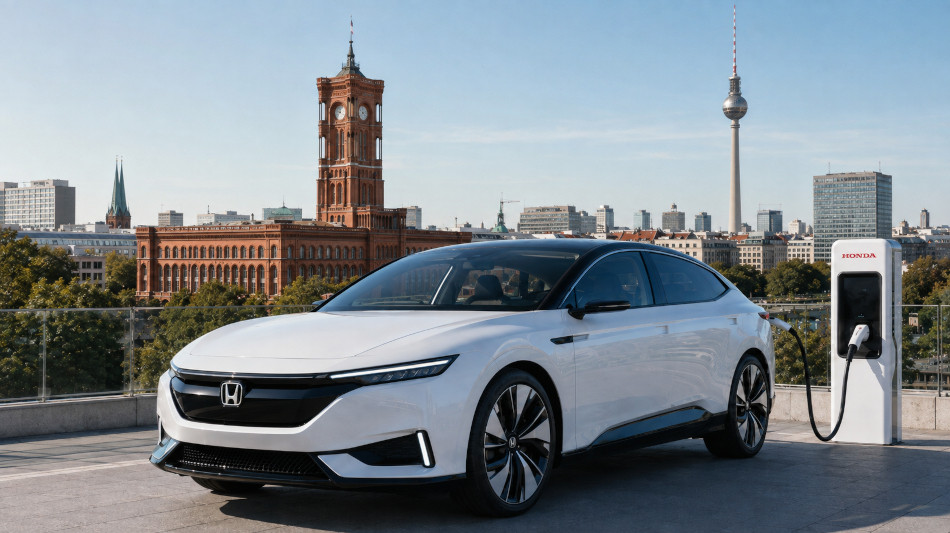
Europe has become one of Honda’s smallest major car markets, but the Japanese manufacturer is not preparing to retreat. Under regional president Hans De Jaeger, its new strategy is built around a deliberately modest recovery: move annual European sales back towards roughly 100,000 vehicles within the next two to three years, preserve pricing power and avoid the costly discounting that has become increasingly common as new brands fight for recognition.
The objective says much about how Honda now views Europe. This is not an attempt to recreate the scale the company enjoyed at its peak, when it sold more than 300,000 cars in the region. It is a plan to establish a smaller but healthier business, supported by a more distinctive product range, tighter control of costs and a clearer idea of where the Honda badge can still command loyalty.
A recovery measured in quality, not scale
Honda’s recent numbers explain the caution. Core European sales fell to about 72,000 cars in 2025, compared with 313,000 in 2007. In the quarter to the end of June 2026, European automobile sales remained broadly unchanged at around 17,000 units. The wider market, by contrast, has returned to growth. New car registrations in the European Union rose by 5.7 per cent during the first half of 2026.
Closing that gap through price cuts would be the obvious response, but it would also be the most dangerous. Chinese manufacturers are scaling quickly, launching broad model portfolios and using strong battery supply chains, fast development cycles and competitive monthly payments to gain ground. By June, BYD and MG were each registering more than 38,000 vehicles in a single month across the main European markets, while newer names such as XPeng, Leapmotor, Zeekr, Omoda and Jaecoo continued to expand their presence. Honda cannot match that offensive by chasing every segment or subsidising volume indefinitely. Its answer is to focus on profitability per vehicle, retain existing customers and enter selected areas where a recognisable engineering character matters more than being the cheapest option. Southern and Central Europe are expected to provide part of that growth, alongside markets where Honda already has a loyal customer base and where hybrid power remains commercially strong.
The target of about 100,000 annual sales is therefore significant precisely because it is restrained. It would restore momentum without requiring Honda to flood retailers with stock, undermine residual values or build a costly regional structure for volumes that may not last.
Japan becomes the natural product base
The next phase of Honda’s European range is likely to draw heavily on models developed for Japan. The logic is straightforward. Japanese and European buyers share a greater preference for compact dimensions, efficient hybrid systems and cars suited to dense cities than customers in North America, where larger sport utility vehicles and pick-ups dominate.
This alignment gives Honda access to products that require less fundamental adaptation for European roads. It also allows the company to use existing Japanese engineering and production more effectively after ending car manufacturing at Swindon and in Türkiye in 2021. Europe is now an import market for Honda, which makes disciplined product selection essential. Every model must justify shipping costs, currency exposure, regulatory adaptation and retailer support.
A Japan-led portfolio does not mean a narrow range of conservative cars. It means selecting vehicles whose size, powertrain and character fit European demand rather than importing models simply because they are available elsewhere. Honda is working through a wider global product programme and has indicated that its European choices will favour compact cars, hybrids and carefully chosen niche models.
That approach should also shorten the distance between product development and regional demand. Chinese competitors have made speed a strategic weapon, often introducing several models while established manufacturers are still completing a conventional replacement cycle. Honda does not need to imitate every part of that system, but it does need to make decisions faster and bring relevant Japanese products to Europe before their commercial window closes.
Hybrids remain the commercial bridge
Honda’s decision to place hybrids at the centre of its recovery is supported by the market rather than nostalgia. Hybrid electric cars accounted for 37.3 per cent of new European Union registrations in the first half of 2026, making them the most popular powertrain category. Battery electric vehicles reached 20.7 per cent, while plug-in hybrids took 9.8 per cent. Petrol and diesel together fell below 30 per cent.
Those figures describe a market moving decisively towards electrification, but at different speeds. Battery electric adoption is strongest in Northern and Western Europe, while full hybrids and plug-in hybrids remain especially important in Southern and parts of Central and Eastern Europe. That split gives Honda room to use its mature e:HEV system as a commercial bridge while continuing to develop fully electric cars. Globally, Honda has reset the pace of its electric expansion and elevated hybrids within its investment plan. The company intends to introduce next-generation hybrid models from 2027 and is targeting 2.2 million hybrid sales worldwide by 2030. It is also seeking major reductions in the cost of its hybrid systems through component commonality, more efficient production and greater scale.
For Europe, this can provide a useful balance. Models such as the Jazz, Civic, HR-V, ZR-V, CR-V and Prelude already give Honda a largely electrified passenger-car range. The battery electric e:Ny1 remains available in parts of the region, while Britain has gained the compact Super-N. The challenge is not whether Honda has electrified technology. It is whether that technology is packaged in cars that buyers notice, understand and are prepared to pay for.
Regulation leaves no room for complacency. The European fleet target for new cars is 93.6 grams of carbon dioxide per kilometre from 2025 to 2029, with manufacturers allowed to average their compliance across 2025, 2026 and 2027. Hybrids can lower fleet emissions, but they cannot remove the need for competitive battery electric volume. Honda’s strategy must therefore protect hybrid earnings while expanding electric sales in the markets where demand and infrastructure are advancing fastest.
Character instead of commodity
The revived Prelude hybrid coupé is an important symbol of the plan. It does not compete in a large-volume category, yet it gives Honda something many mainstream ranges lack: a recognisable product with history, technical identity and emotional appeal. The Prelude HRC concept pushes that message further by linking electrification with the company’s motorsport engineering.
At the other end of the market, the Super-N applies a similar idea to a compact electric city car. Its small footprint, playful design and simulated shift experience are intended to make an electric car feel engaging rather than merely rational. In Britain, where the model is already being sold, it also gives Honda a lower-priced entry point and a way to reach younger motorists who may know the company better for motorcycles than for cars.
That matters because Honda’s European brand strength is uneven. Its motorcycle business has far greater scale and visibility than its car operation, while its marine engines and power products reinforce a reputation for engineering and reliability. Converting even part of that familiarity into car consideration is a realistic opportunity, but only if the vehicles express a clear Honda identity. The strategy therefore depends on a portfolio with two layers. Mainstream hybrids must provide dependable volume and repeat business. Distinctive models must attract new customers, generate showroom interest and rebuild cultural relevance. The Prelude and Super-N alone cannot transform the business, but they demonstrate the type of product thinking Honda believes can separate it from anonymous competition.
Commercial discipline will decide the outcome
Product is only one part of the recovery. Honda is also examining how it sells cars. Britain already combines elements of an agency system with the traditional retailer model, and the structure is being considered for other European markets. A carefully designed system could improve price consistency, reduce unwanted stock and give Honda better control of the customer relationship. A poorly executed one could weaken retailers precisely when the brand needs local advocacy and service confidence.
The absence of European car production is another constraint. Importing from Japan can produce a coherent range, but it also exposes Honda to exchange rates, freight costs and longer planning cycles. Strong margins will depend on accurate forecasting and a willingness to limit variants rather than chase every possible buyer. The company must also ensure that a smaller retailer network does not make ownership feel inconvenient compared with larger rivals.
The broader financial backdrop makes that discipline unavoidable. EV-related losses and tariff effects pushed Honda to an operating loss of 414.3 billion yen in the year to March 2026. The first quarter of the new financial year showed a sharp recovery, with operating profit more than doubling to 530.7 billion yen and the automobile business returning a profit of 192.1 billion yen. Europe’s role in that recovery is not to deliver spectacular volume. It is to stop consuming capital without producing adequate returns.
Honda’s European plan is consequently less dramatic than a conventional comeback story. There is no promise to dominate the market, no attempt to outspend Chinese rivals and no claim that one new model will reverse two decades of decline. The proposition is more credible: sell more cars than today, but only where Honda can defend the price, the product and the customer relationship. Reaching 100,000 annual sales would be a useful milestone, yet the more important test will be what sits behind that number. If Honda can combine Japanese compact-car expertise, profitable hybrid technology, selective electric models and a renewed sense of character, Europe can again become a stable part of its global car business. If it relies too heavily on loyal older customers or arrives late with new products, modest growth may still prove difficult.
The strategy is not about becoming a mass-market force again. It is about making Honda relevant enough, distinctive enough and profitable enough to stay.
U.Sellmer